Real Fencing Blog
What Should Be Included in a Fence Quote? A Homeowner’s Checklist
Published 11 June 2026

Fence quotes can be confusing. One quote is a single line and a cheap number. Another is a full page and costs more. It is not obvious which one is better value, and the price alone won't tell you.
Here's the short answer: a good fence quote should clearly state what is being built, what materials will be used, what is included, what is excluded, and what could change the final price. If a quote can't answer those questions, you are not really comparing prices. You are guessing.
This checklist walks through what to look for, section by section, based on what we see in real fencing quotes around Auckland.
Key Takeaways
- A fence quote should specify the fence type, height, length, materials, and fixings — not just "build timber fence — $X".
- Cheap quotes usually save money on what you can't see: thinner palings, smaller posts, less concrete, shallower holes, nails instead of screws.
- Old fence removal and disposal typically adds around $20–$30 per metre on timber fences. Check whether it's in the price.
- Post-hole digging is the biggest source of surprise costs. A good quote tells you upfront how unforeseen ground conditions will be handled.
- Always check whether the price includes GST.
- A quote given without a site visit is a red flag.
The fence itself: type, height, and length
Start with the basics. The quote should state exactly what is being built: a timber paling fence, an aluminium fence, a pool fence, PVC, or chain-link. It should give the height, the approximate length in metres, the style, and the finish.
This sounds obvious, but plenty of quotes skip it. If the document just says "fencing" and a price, you have no way of holding anyone to a standard later. "1.8m timber paling fence, approximately 22 metres along the rear boundary" is a quote. "Fence — $5,500" is a number.
Materials and construction details: where cheap quotes actually save money
This is the section most homeowners skim, and it's where the real differences between quotes hide.
A weak quote says "build timber fence — $X". A proper quote names the post type and size, the rails, the palings or panels, the concrete, the fixings, the gate hardware, and the timber treatment grade.
Why does that level of detail matter? Because when a quote comes in noticeably cheaper, the savings usually come from the materials and the parts of the build you'll never see once the fence is up. These are the corner-cuts we see most often when comparing quotes on real jobs:
| Component | What a solid build uses | Where cheap quotes cut |
|---|---|---|
| Palings | Thicker palings | Thin 19mm palings |
| Posts | 100x100 posts | 100x75 posts |
| Concrete | Two to three bags per post hole | One bag per hole |
| Post holes | Dug to correct depth | Shallow holes |
| Rail fixings | Batten screws | Nails |
None of these shortcuts are visible in the finished fence on day one. A fence with shallow posts, one bag of concrete per hole, and nailed rails looks identical to one built properly. The difference shows up two winters later when the posts start moving and the rails work loose.
So when one quote is meaningfully cheaper than another, don't ask "why is this one so cheap?" Ask "what size posts, how many bags of concrete per hole, and screws or nails?" A contractor who built the job properly can answer instantly. A contractor who priced it thin will get vague.
Site preparation and old fence removal
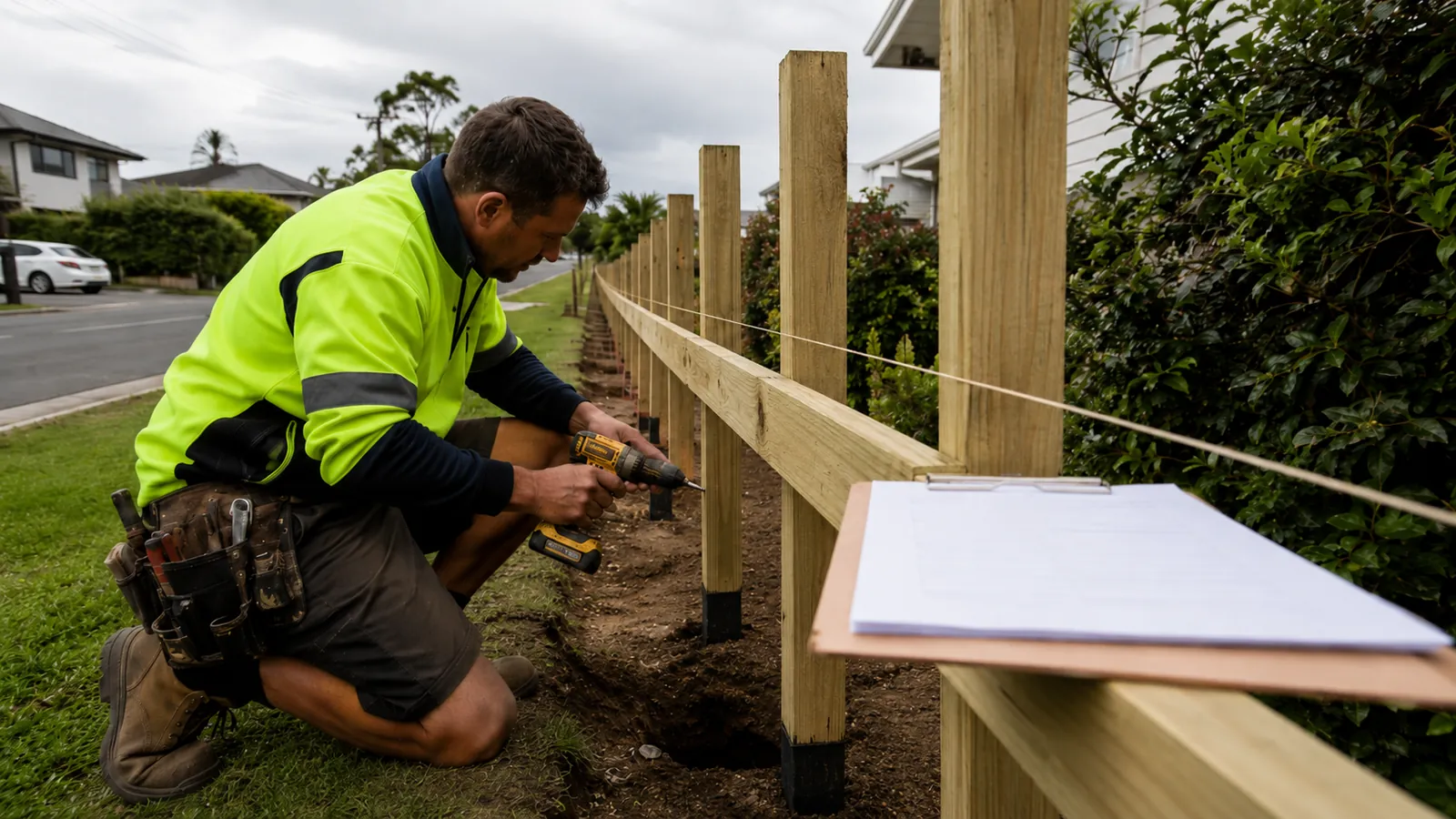
If you're replacing an existing fence, check whether the quote includes taking the old one down and getting rid of it. On timber fences, removal and disposal typically adds around $20 to $30 per metre. On a 25-metre boundary, that's $500 to $750. A quote that quietly leaves it out can look cheaper than one that includes it while actually costing you more.
The quote should also address site conditions: clearing vegetation along the line, uneven ground, and access. If the only way to the back boundary is a narrow path down the side of the house, every post, rail, and bag of concrete gets carried through by hand. That's labour, and it should be priced, not discovered.
The post holes are where quotes blow out
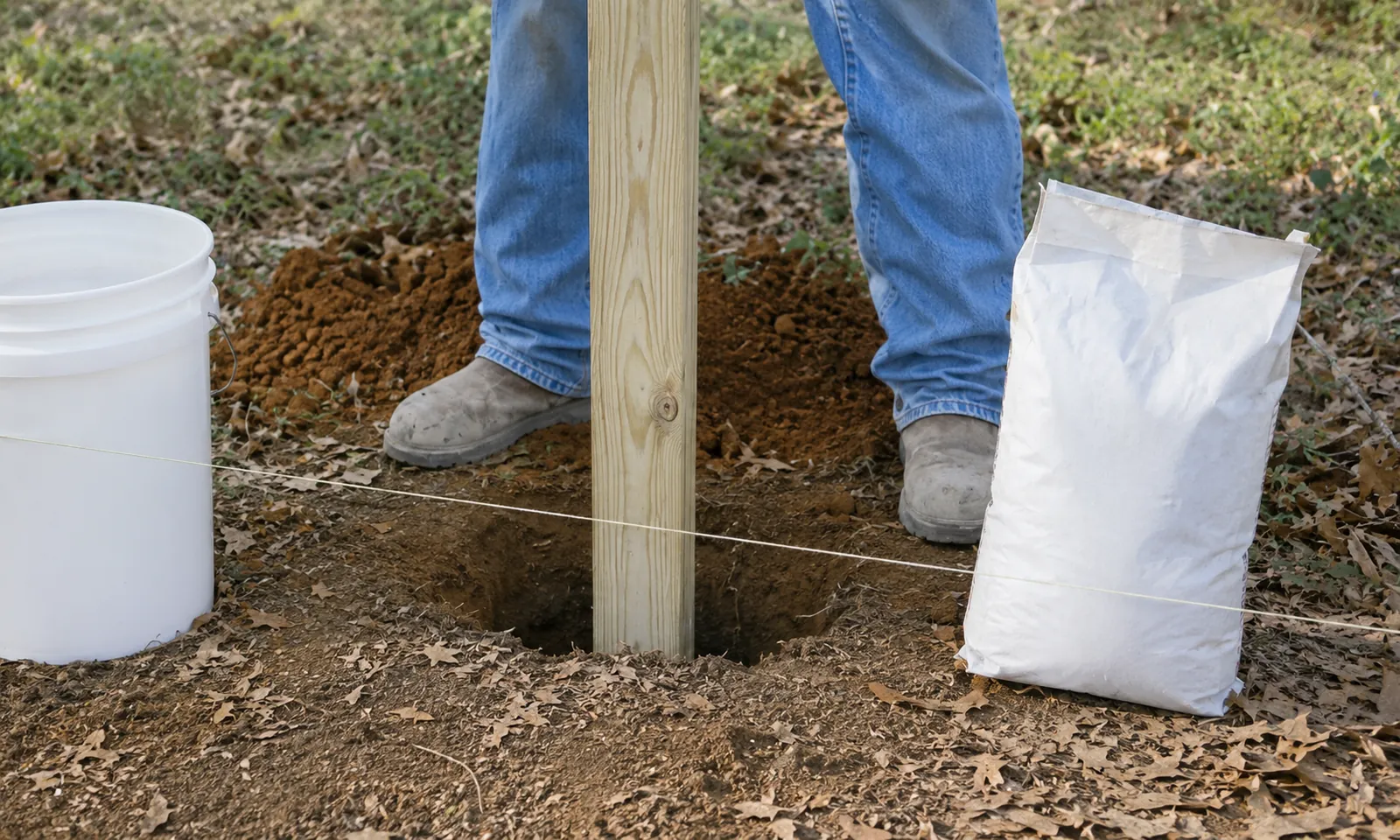
Here's something most homeowners don't know: the single biggest source of surprise cost on a fencing job is digging the post holes. Nobody knows exactly what's under the ground until the digging starts, and that includes the installer. Tree roots, old concrete footings, and rock can turn a quick job into a very long one.
A good quote doesn't pretend this risk doesn't exist. It tells you upfront how unforeseen ground conditions will be handled and what they would cost if they come up. That's not the contractor hedging. That's the contractor being honest about the one part of the job no one can see in advance. Be more wary of the quote that never mentions ground conditions at all.
Gates, access, and extras
Gates get forgotten constantly. The quote should state whether gates are included, how many, what hardware comes with them (hinges, latch, drop bolt), and whether anything about the gate position makes the work harder.
A gate is not a metre of fence with a hinge on it. It has its own posts, its own bracing, and its own hardware, and it's the part of the fence that gets used every day. If the quote doesn't mention the gate, assume it isn't priced, and ask. (Our gates for fences page covers the common options and hardware.)
Labour, timing, and availability
A good quote makes the timing clear: when the work can start, roughly how long it will take, and whether the timeline depends on weather or material availability. It should also be obvious who you contact when you have a question.
One thing worth knowing about timing in Auckland: good fence installers usually have a short wait. One to two weeks is normal. Sometimes we can fit a job in the same week, and genuinely urgent jobs can often be shuffled in. But if someone can start a full fence build tomorrow with no questions asked, it's fair to wonder why their calendar is empty. The cheap-and-nasty end of the market is the end that can always do a same-day job. A modest wait is usually a sign you've found someone whose work other people want.
GST, clean-up, and exclusions
Before accepting any quote, check whether the price includes GST. In New Zealand that's a 15% difference, and quotes are written both ways. Two quotes that look $800 apart might be near-identical once you put them on the same GST basis. If you want a rough starting number before getting quotes, our fence cost calculator gives you a ballpark for your fence type and length.
The same goes for clean-up and waste disposal. Then read the exclusions. A good quote states them plainly. A vague quote leaves them for you to find out about on the final invoice.
One more thing worth knowing if the fence sits on a shared boundary: under the Fencing Act 1978, your neighbour may be liable for half the cost of an adequate boundary fence. A clear, itemised quote makes that conversation with your neighbour much easier, because you can show exactly what's being built and what it costs.
Is the cheapest fence quote always the best option?
Not always. But sometimes, yes. A cheaper quote can be perfectly fine if it covers the same scope: same materials and sizes, same preparation, gates, removal, clean-up, GST treatment, and timeframe. Some contractors simply have lower overheads or want to fill a gap in their schedule.
The problem is when the cheaper quote isn't a like-for-like comparison. If one quote includes old fence removal, 100x100 posts, screwed rails, and GST, and the other is a one-liner that mentions none of it, the gap between them isn't savings. It's missing information. Compare the details, not just the final number.
Red flags in a fence quote
A few warning signs we'd take seriously, based on quotes we've seen go wrong:
- A price given without a site visit. Some contractors quote off a text message and a guess at the length. Any proper fence quote needs a site inspection — the ground, the access, and the old fence all change the price.
- A one-line quote with no detail on materials or sizes.
- No mention of old fence removal on a replacement job.
- No GST clarity.
- No mention of how unforeseen ground conditions are handled.
- Vague or missing gate pricing.
- An unclear start date, or slow and patchy communication during the quoting stage. How a contractor communicates before they have your money is the best preview of how they'll communicate after.
None of these alone means a contractor is dodgy. Two or three together means keep looking.
How Real Fencing quotes a fence
At Real Fencing we try to itemise everything. Our quotes tell you exactly what materials we plan to use: the timber, the post sizes, even how many bags of concrete go into each hole. And because we know post-hole digging is where surprises live, we give you an idea upfront of how pricing works if something unforeseen turns up under the ground, like rock or old concrete.
We work this way because it makes quotes comparable. When you can see every line, you can put our quote next to anyone else's and know exactly what you're comparing. We also help homeowners get quotes from experienced local fencing teams, so if you want a second opinion on a quote you've already received, we're happy to give you a straight answer.
The bottom line
The best fence quote is not always the cheapest one. It's the quote that clearly explains the work, names the materials, includes the right details, and gives you confidence before the first post hole is dug.
Planning a new fence? Contact Real Fencing for clear advice and a professional, fully itemised quote for your property.