Real Fencing Blog
Pool Fence Rules in NZ: Height, Gaps, Gates and Inspections
Published 8 November 2026
Maybe a pool is going in, the council has written about an inspection, or you're buying a house with a pool and want to know what you're taking on. The rules are the same in every case, and they're more specific than most people expect. Here they are in plain English, taken from the Building Code and the government's own inspection checklist, along with what we've learned building pool fences.
The short answer: any pool that can hold 400 mm or more of water needs a barrier at least 1.2 metres high, with no gap a 100 mm ball could pass through and nothing a child could climb within 1.2 metres of the outside. Gates must open away from the pool and close and latch on their own. A new pool fence needs a building consent, and the pool has to be inspected every three years.
Which pools need a fence?
Any pool or spa that can hold 400 mm (40 cm) or more of water and is used for swimming, paddling or bathing. That includes:
- in-ground and above-ground pools, indoors or outdoors;
- inflatable, portable and temporary pools;
- spa pools and hot tubs, including inflatable ones.
The rules still apply if the pool isn't filled that deep, if it's only up for summer, or if no children live at the property. Many drownings happen when young children visit someone else's home, which is why the law doesn't care who lives there. The one common exception is a small spa pool with a proper lockable cover, covered further down.
Pool fence requirements at a glance
These are the measurements councils check against, from the Building Code's acceptable solution for pool barriers (F9/AS1).
| Rule | What it means |
|---|---|
| Height | At least 1.2 m, measured from the ground on the outside |
| Gaps | A 100 mm ball can't pass through anywhere, including underneath |
| Rails | Rails or anything sticking out more than 10 mm on the outside must be at least 900 mm apart |
| Clear zone | Nothing climbable within 1.2 m of the outside of the fence |
| Gates | Open away from the pool, close and latch on their own |
| Latch | At least 1.5 m high, or on the pool side out of a child's reach |
| Boundary | At least 1.8 m high on the pool side and at least 1 m from the water |
| Consent | Needed for every new pool barrier |
| Inspection | Every 3 years, by the council or an independent pool inspector |
If your fence or gate needs work before an inspection, ask us for a free quote. We build pool fences to these rules.
How high does a pool fence need to be?
At least 1.2 metres, measured from the ground on the outside of the fence. That last part catches people out. If a garden bed, a step, a retaining wall or a deck is built up against the outside, the height is measured from the top of it. A fence that was 1.2 metres when it went in can end up too short after some landscaping.
A fence on the boundary with a neighbour has a higher bar, covered below.
Why an ordinary timber fence usually isn't a pool fence
This is the rule that matters most if you want a timber pool fence. A standard boundary fence has two or three rails running along one side. If those rails face out from the pool, a child can use them as a ladder. So anything on the outside face that sticks out more than 10 mm, whether rails, battens, braces or decorative trim, has to be at least 900 mm apart.
In practice that means one of three things:
- the rails go on the pool side, with the smooth face outside;
- the fence is built with no horizontal parts on the outside closer than 900 mm, which is how most aluminium pool fencing is made;
- for horizontal slat fences, the gaps between slats are kept to 10 mm or less, so there's no foothold.
Trellis, lattice and mesh have to meet the same rules. A pretty lattice topper on the outside of a pool fence is a ready-made climbing frame.
What counts as climbable near the fence?
Anything a small child could drag over, stand on or step up from, within 1.2 metres of the outside of the fence. Auckland Council names planters and outdoor furniture as one of the most common reasons pools fail inspection. Others to watch for:
- pot plants, garden furniture, the barbecue and toy boxes;
- the pool pump or filter housing;
- retaining walls, steps and raised garden beds;
- trees or shrubs with low, strong branches;
- a wheelie bin parked against the fence.
The clear zone is on the outside of the fence, which is easy to forget when you're the one inside it.
Can a boundary fence be part of the pool fence?
Yes, but it has to do more. A child could climb onto the top from the neighbour's side, so a boundary barrier is built to stop them climbing down into the pool area. It needs to be:
- at least 1.8 metres high, measured from the ground on the pool side;
- free of any gap a 100 mm ball could pass through;
- at least 1 metre from the water's edge;
- clear of anything to grip or stand on in the top 900 mm on the pool side, with no ledges or handholds near the top.
That usually means the rails sit on the neighbour's side, or below the top 900 mm on your side. Talk to your neighbour before you start. Under the Fencing Act 1978, neighbours generally share the cost of an adequate boundary fence, but extra height or features one side wants are usually paid for by that side. Our fence cost guide has more on splitting costs.
What are the rules for pool gates?
Gates are where most pools fail. Auckland Council inspected just over 13,000 pools in a year and about one in four failed the first inspection. The most common reason was a gate that didn't close and latch on its own. Nearly a third of the pool fence enquiries we get mention the gate.
A pool gate must:
- be at least 1.2 metres high and meet the same rules as the fence;
- open away from the pool;
- swing clear of anything that could hold it open;
- close and latch by itself from any open position, starting from still;
- have a latch that locks automatically and needs a hand to release it;
- have the latch at least 1.5 metres high, or on the pool side where a child can't reach it or poke something through a gap to release it;
- stay latched and on its hinges if someone lifts it or pulls it down, with less than a 100 mm gap underneath.
Gates drift out of compliance over time. Hinges lose tension, posts move, and salt air is hard on latches. Once a month, open the gate a little, let go, and watch it close and latch. If it stops short, fix it before the inspector finds it.
Can a door or window open into the pool area?
Yes, if the house wall forms part of the barrier and the doors and windows meet the rules. A door into the pool area must:
- be a single door no more than 1 metre wide, hinged or sliding;
- close by itself, or have an alarm that sounds if it's left open;
- latch by itself, with the release at least 1.5 m above the floor inside.
Under the acceptable solution, bi-fold and double doors don't qualify, because they aren't a single door. Windows must have their lower edge at least 1 metre above the floor inside, or a restrictor or screen so the opening is under 100 mm.
What can you have inside the pool fence?
Only things to do with the pool. A barbecue and outdoor furniture are fine. A clothesline or a vegetable garden isn't, because nobody should need to go through the pool gate to hang out the washing or pick the veges.
Do spa pools and hot tubs need a fence?
A small spa pool can use a lockable cover instead of a fence if:
- the water surface area is 5 m² or less;
- the walls are at least 760 mm high and hard to climb;
- nothing that helps a child climb is within 760 mm of the top edge;
- the cover can hold 20 kg in the middle, has lockable straps or padlocks, and carries warning signs.
A cover like that doesn't need a building consent, and the spa doesn't need the three-yearly inspection. Larger spas, and most inflatable hot tubs, need a full barrier.
What about inflatable and above-ground pools?
The same 400 mm rule applies. If an inflatable or portable pool can hold 400 mm of water, it needs a compliant barrier, even if it's only partly filled. Pools that hold less should be emptied and put away after use.
The walls of an above-ground pool can act as the barrier if they're at least 1.2 metres high and meet the other rules. You'll still need a barrier around the ladder, and around pumps, pipes or straps a child could use to climb in.
Do you need consent for a pool fence?
Yes. Unlike most fences, every new pool barrier needs a building consent, even for a temporary pool and even if you build it yourself. The only exception is a safety cover on a small spa pool. Most other fences under 2.5 metres don't need consent, which is why this one surprises people. Allow time for consent in your plans. The council checks the design before work starts and inspects it when it's done.
How do pool inspections work?
Every residential pool must be inspected every three years. You can choose who does it: the council or an independently qualified pool inspector (IQPI) approved by MBIE. Councils keep a register of the pools in their area and can also inspect at any time.
Before your inspection, work through the government's pool barrier checklist for homeowners. Test the gate, clear the 1.2 metre zone, and check nothing has been built up against the outside of the fence.
If a pool fails, the council can issue a notice to fix. Ignoring it can lead to an infringement notice or prosecution, with fines of up to $20,000 for individuals and $60,000 for companies.
Which material makes the best pool fence?
Any material can meet the rules if it's built correctly. About half of the pool fence jobs we quote are aluminium or steel. The other common choices are glass and timber.
- Aluminium pool fencing is usually made to meet the rules, with the rails on the inside and bars under 100 mm apart. It's low maintenance and handles salt air well. See why aluminium suits NZ pools.
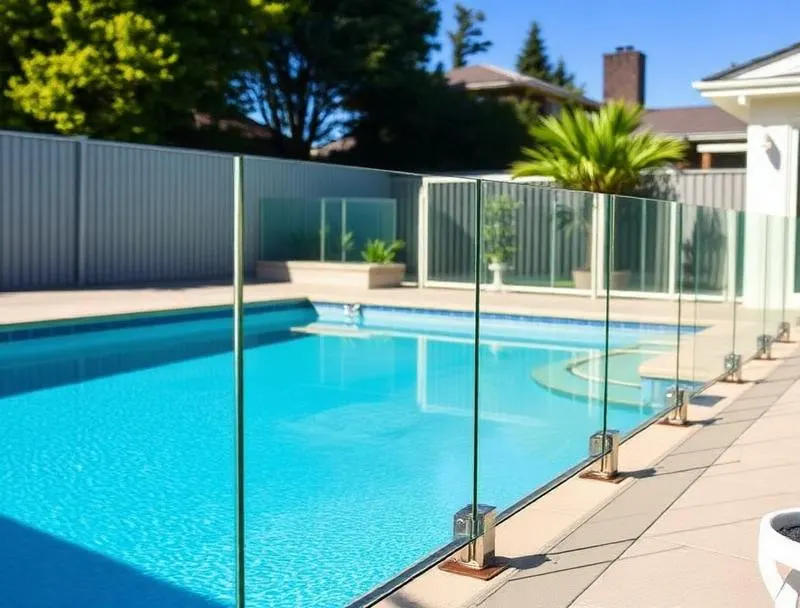
- Glass keeps the view open and gives nothing to climb, but costs more and the hardware needs to be right.
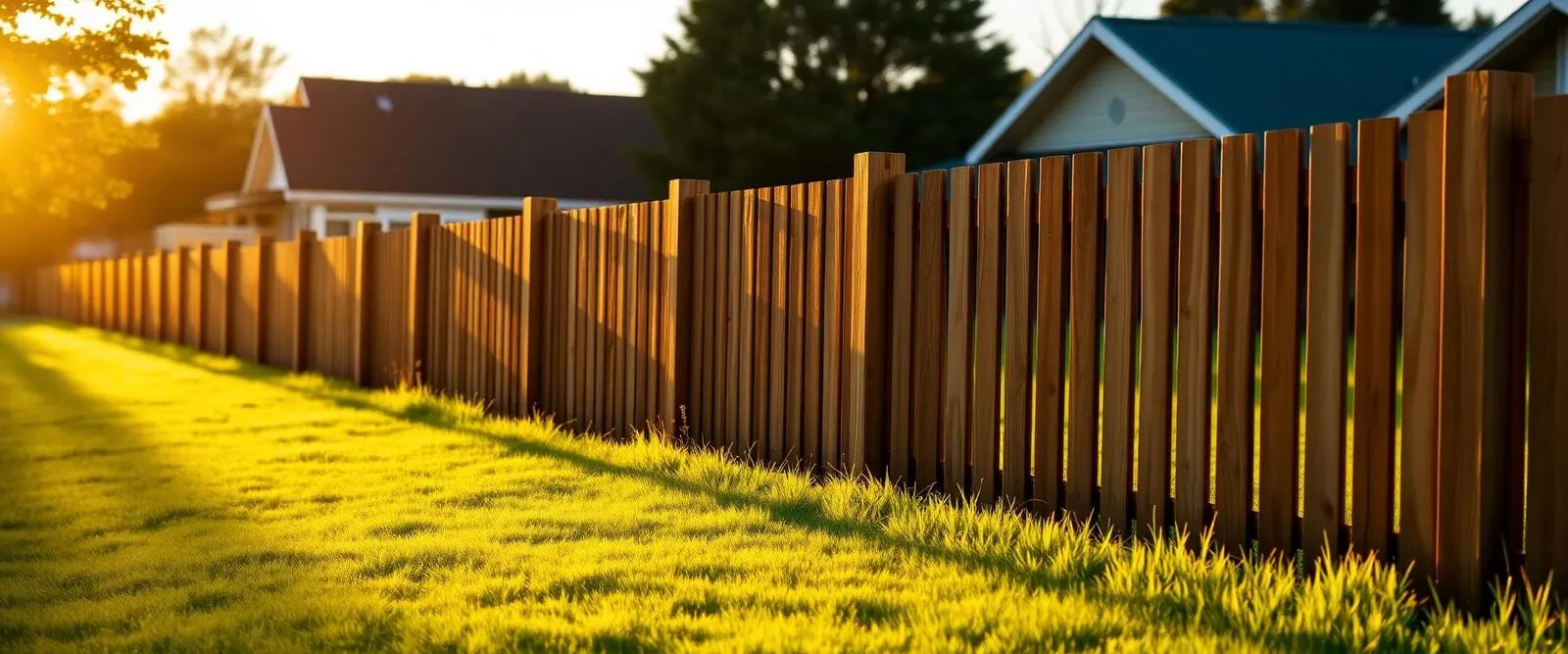
- Timber gives privacy and can match your other fences. It has to be built with a smooth outside face, and it needs checking as it ages and moves.
For styles and ideas, see how a pool fence can look good too, or our pool fencing page.
What does a pool fence cost?
From the pool fence jobs we've quoted, including GST, most came in between:
| Fence length | Price range |
|---|---|
| Up to 10 m | $800–3,200 |
| 11 – 20 m | $2,300–10,100 |
| 21 – 50 m | $6,100–17,400 |
The ranges are wide because a short run of aluminium and a glass fence around a large pool are very different jobs. The smaller jobs include gates and repairs. About a third of the pool enquiries we get are to replace an existing fence. For prices on other fence types, see our fence cost guide.
How to get your pool fence right first time
Send us a few photos of the pool area, roughly how long the fence will be, where you want the gate, and whether any of it runs along a boundary. Tell us if you have an inspection coming up. We'll work out a layout that meets the rules and give you a price.
Where these rules come from
Pool barriers are covered by Building Code clause F9, which replaced the Fencing of Swimming Pools Act in 2017. The measurements on this page come from the acceptable solution F9/AS1 (and F9/AS2 for spa covers), MBIE's safety guidance for pool owners and its homeowner checklist. A designer can propose a different way to comply, but it has to be approved through the consent process. If you're unsure about your pool, your local council can tell you what applies.
The inspection figures come from Auckland Council. Our own figures come from the 2,258 fence quotes behind our fence cost guide. Pool fence prices are the middle half of our pool fence quotes, rounded to the nearest $100, including GST.