Real Fencing Blog
The Fencing Act in NZ: Who Pays for a Boundary Fence?
Published 8 November 2026
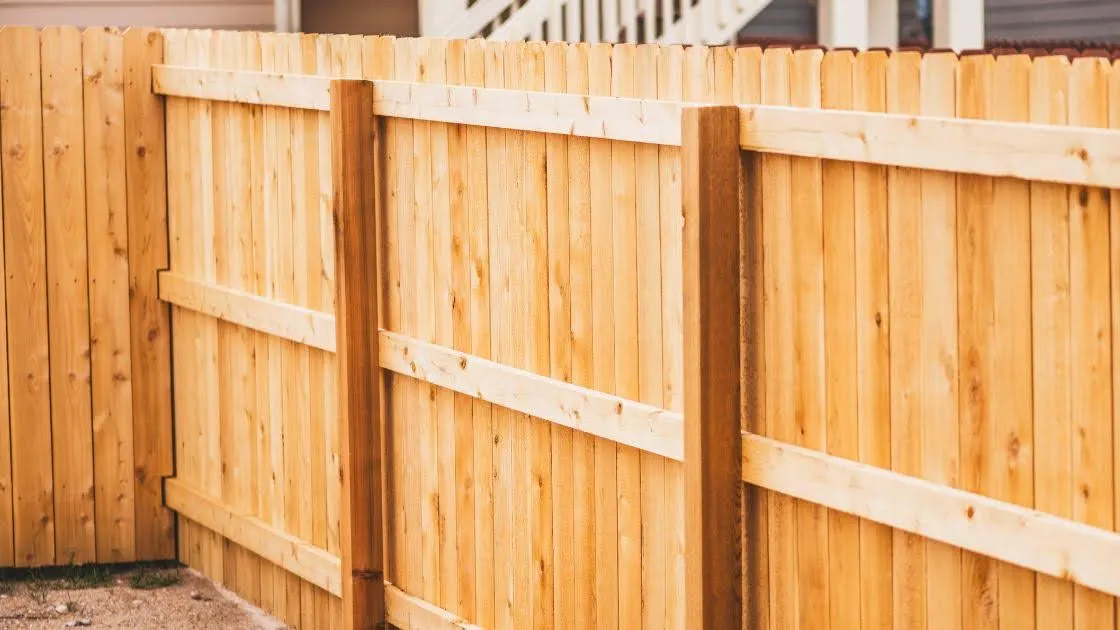
The fence between you and next door is leaning, rotten or half blown over, and you'd like it replaced. The first question is nearly always the same: does the neighbour have to pay half? Usually, yes. But only if you follow the steps in the Fencing Act 1978, and only for a reasonable fence. Here's how it works in plain English, with real prices from our own quotes.
The short answer: under the Fencing Act, neighbours share the cost of an adequate boundary fence equally. To make your neighbour pay half, you give them a written fencing notice before any work starts. They have 21 days to object. If they don't, they're treated as having agreed. If you build first, or build something fancier than an adequate fence, you may end up paying for all of it or for the extra.
Who pays for a boundary fence in NZ?
Both neighbours, in equal shares. Section 9 of the Fencing Act says the occupiers on either side of a boundary that doesn't have an adequate fence must contribute equally to work on one. "Work" covers building, replacing, repairing and maintaining the fence, clearing the line for it, and any survey needed to find the boundary.
The split changes when:
- you both agree to something else. Any agreement between neighbours stands, so you can agree on 60/40 or that one of you pays it all.
- there's a fencing covenant on the title. Developers often add one so they don't pay for fences in a new subdivision. More on that below.
- one neighbour caused the damage. If they backed a trailer into it, they pay the whole cost of fixing it.
- you want more than an adequate fence. Your neighbour only has to pay half of a reasonable fence. Anything above that is usually yours, unless they agree to share it.
- the fence is also a pool fence. The pool owner pays for anything extra the pool rules require.
What counts as an "adequate" fence?
The Act defines an adequate fence as one that is "reasonably satisfactory for the purpose that it serves or is intended to serve". In practice that's judged against what the fence is for and what's normal on that kind of property. On a suburban section, replacing a rotten 1.8 metre timber paling fence with a new one the same is the classic example. On a farm, it's a sound post and wire fence.
Schedule 2 of the Act describes some example fences you can name in a notice. They're minimums, not targets:
- close boarded fence: at least 1.5 m high, upright boards nailed to two rails, no gaps;
- paling fence: at least 1 m high, two rails, no more than 100 mm between palings;
- post and rail fence: at least 1 m high, four rails, posts no more than 2.75 m apart;
- rural wire fences: seven to ten wire fences, or netting, with the top wire at least 1 m off the ground.
If you want aluminium, steel or a taller privacy fence where a timber fence would do, the fair way to split it is usually half the cost of an adequate timber fence each, with you paying the difference. Put that split in your notice so there's no argument later.
How much does each neighbour pay?
These are the price ranges from our own timber fence quotes, and what each neighbour's half works out to. Most of the boundary fences we quote are timber, and about half are replacing an old fence.
| Fence length | Whole fence | Each half |
|---|---|---|
| Up to 10 m | $1,400–3,900 | $700–2,000 |
| 11–20 m | $3,300–6,400 | $1,700–3,200 |
| 21–50 m | $5,300–10,100 | $2,700–5,100 |
| Over 50 m | $8,400–17,100 | $4,200–8,600 |
Prices include GST. Where you land in a range depends on height, the ground, access, and whether the old fence has to come down first. Aluminium and steel cost roughly 20% more than timber for the same length, and under the usual split that extra is paid by whoever wants it. Our fence cost guide has the full breakdown.
Need a price to put in your fencing notice? Get a free written quote. We itemise it, so you can attach it to the notice and your neighbour can see exactly what they're paying for.
How do I give my neighbour a fencing notice?
Talk to them first. Most neighbours agree once they've seen the old fence and a price, and a friendly chat is quicker than paperwork. If you can't agree, or you want certainty before spending money, send a formal fencing notice. The Act's own template (Form 1) asks for:
- both owners' names and the property addresses;
- which boundary, or which part of it, is being fenced;
- the type of fence, in enough detail that your neighbour knows the materials and could estimate the cost;
- who will build it (a contractor, one neighbour or both);
- the estimated total cost and how it's split (half each, unless you say otherwise);
- how materials will be bought and paid for;
- the date you want the work to start.
The notice must also say what happens if they don't respond: they have 21 days to object and make counter-proposals, and if they don't, they're treated as having agreed and must pay their share. End it with "This notice is given under the Fencing Act 1978", then date and sign it.
How to deliver it: the Act says to hand it over in person or send it by registered post to their last known address. Email on its own isn't one of the listed methods, so don't rely on it. Keep a copy and a note of the date you delivered it. If your neighbour is a tenant, the notice goes to the owner (the landlord), not the tenant.
What happens after the notice?
- No reply in 21 days: your neighbour is treated as having agreed. You can start the work.
- They send a cross-notice: they've objected and may have suggested something different. You both have 21 days to sort it out, and work can't start until you agree or the Disputes Tribunal decides.
- Start within 28 days. Once you're allowed to start, you have 28 days. If you don't, either of you can do the work within the next 90 days. If nothing happens for 90 days, the notice lapses and you'd need to start again.
- If either house sells before the matter is settled, the notice stops having effect. Send a new one to the new owner.
- Once the work is done as the notice described, you can recover your neighbour's share from them as a debt.
What if my neighbour won't pay?
If they agreed, or didn't object within 21 days, and the fence was built as the notice said, you can claim their share through the Disputes Tribunal. The Tribunal also sorts out disagreements about whether the old fence is adequate, what the new one should be, where it goes and who pays what.
Since 24 January 2026 the Tribunal can hear fencing claims of up to $60,000 (it used to be $30,000, and many older guides still say so). You don't need a lawyer. The filing fee depends on the amount you're claiming:
| Amount claimed | Fee |
|---|---|
| Under $2,000 | $62 |
| $2,000 to $4,999 | $124 |
| $5,000 to $30,000 | $248 |
| $30,001 to $60,000 | $496 |
Fencing claims above $60,000 go to the District Court, which usually means a lawyer.
Can I build the fence first and ask for half later?
Not if you want to be able to make them pay. Unless your neighbour agrees, they don't have to contribute to any work done before the notice was served, during the 21 days, or while a disagreement is still being sorted out. Plenty of people find this out after the fence is up. Get agreement in writing, or serve the notice, before you book the job.
The exception is urgent work. If a fence is suddenly damaged or destroyed, for example by a storm, and needs fixing straight away, either neighbour can do the repair without notice and recover half the cost. It's meant for work that genuinely can't wait, not a planned upgrade, and the Disputes Tribunal can be asked to decide whether the work really was urgent. See our guide to repairing or replacing a damaged fence.
Where does the fence go, and who gets the good side?
Unless you agree otherwise, the middle of the fence goes on the boundary line, and posts go on the line or as close to it as possible. Nobody is allowed to build a fence that sits on the neighbour's land, even slightly, without their consent.
If you're not sure where the boundary is, a licensed cadastral surveyor can find or replace the pegs. Survey work needed to fix the boundary counts as "work on a fence" under the Act, so its cost can be shared too. It's worth doing before a long or expensive fence goes in, especially if the old fence wandered.
The Act doesn't say who gets the "good side" with the smooth palings. Agree it with your neighbour and write it into the notice. Some people choose a lapped or double-sided paling fence so both sides look finished.
When doesn't the Fencing Act apply?
- Road boundaries. The Act doesn't cover roads, so the council won't pay half of your front fence.
- Some public land. National parks, railway land, esplanade reserves and marginal strips along rivers and the coast are excluded.
- Council reserves. The Act does apply to parks and reserves, with the council as your neighbour. But a council can register a fencing covenant on reserve land that never expires, so check with yours before you send a notice.
- New subdivisions. If your title has a fencing covenant in favour of the developer, you can't make the developer pay. These covenants stop being registered 12 years after they're put on the title. Your neighbour in the subdivision is still liable for half as normal.
- Renters. A tenant isn't liable unless the lease is for ten years or more. Deal with the property owner.
Does my neighbour pay for a pool fence on the boundary?
Only what they'd pay for a normal fence. If the boundary fence also has to meet the pool rules, the pool owner pays for everything the pool rules add, such as extra height or a non-climbable face. The neighbour's share stays at half of an ordinary adequate fence. Our pool fence rules guide covers what a boundary pool fence needs.
Do I need consent for a boundary fence?
Most boundary fences up to 2.5 metres high don't need a building consent. Your district plan may still limit height, especially on a front boundary, and a new pool fence always needs consent. See our guide to fence height rules in NZ.
Getting a price for a shared fence
Send us the length of the boundary, a couple of photos of the old fence, and what you'd like instead. We'll measure up, give you a written itemised quote you can attach to your fencing notice, and show the cost of an adequate timber fence separately if you're thinking about something more.
Get a free boundary fence quote.
Where this comes from
The rules on this page come from the Fencing Act 1978, as it stands after the Disputes Tribunal changes of 24 January 2026, and the Disputes Tribunal's published fees. Prices come from the 2,258 fence quotes behind our fence cost guide: the middle half of our timber quotes in each length band, rounded to the nearest $100, including GST. Each half is the whole range divided by two.
This is a plain-English guide, not legal advice. If your situation is unusual, such as a disputed boundary, a covenant on your title or a neighbour you can't contact, Community Law gives free legal help, or talk to a lawyer.